
Thanks for joining me in showcasing the User Experience and Design process that I was a part of for the Spring Semester of 2019 at the Edward R. Murrow College of Communication. During this Semester, I worked with Adam Faasee, Hannah Zmuda, Youjin Kim, and under the tutelage of my Professor, Chris Cooney, to develop a functional wire frame design for a companion application for the Fentanyl detection device made by the company OpiAid.
The first step in this process was the User Experience personal wire frame, which was developed through three iterative steps. The first iterative step can be seen here: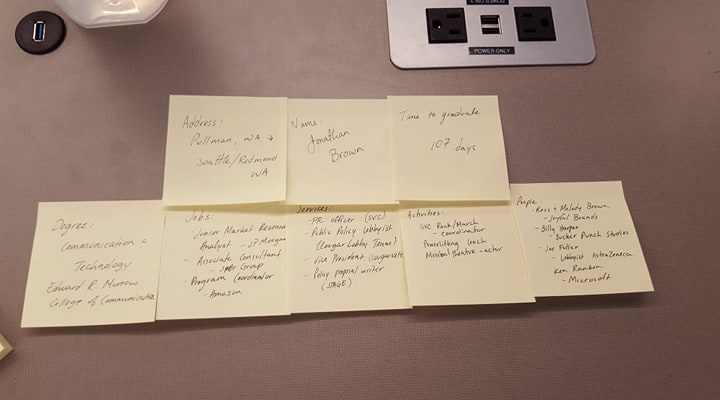
The second iterative step expanded from this step, outlining with more detail potential future progress for me: 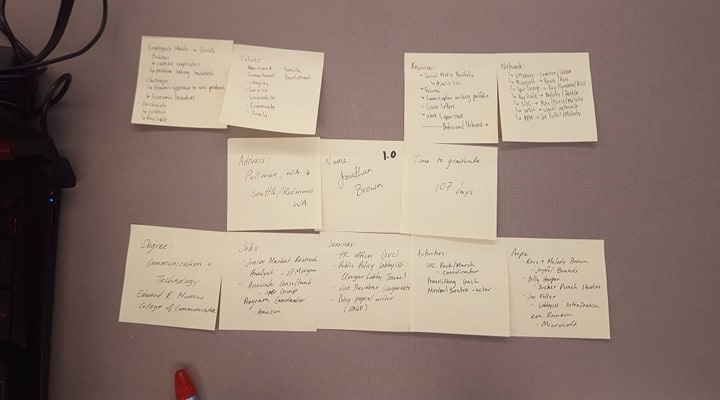
Finally, the third iterative step brought this process into a more complete framework of understanding how I wanted to approach this class and my own professional development: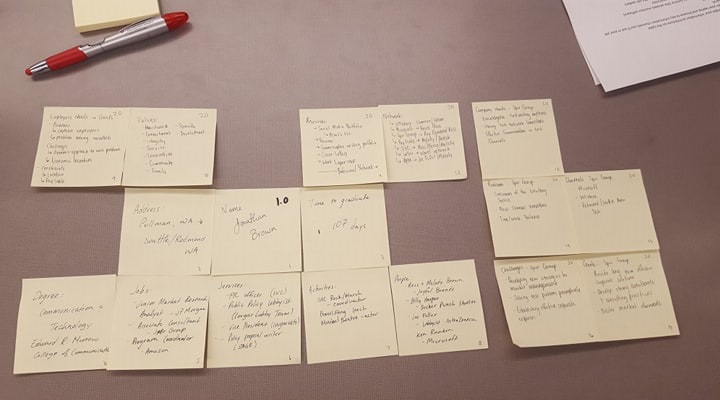
Once we had completed this process through the first few weeks of class, we met with our teams and got to work on developing meaningful and professional quality deliverables for the Business Plan Competition, which incorporated a functional wire frame of the application, FAQs, User Personas, and an Executive Summary.
The Executive Summary was the first step in the process for the Business Plan competition, and incorporated a significant amount of cooperative work between both Adam and myself on the communication team, and Hannah and Youjin on the tech development team: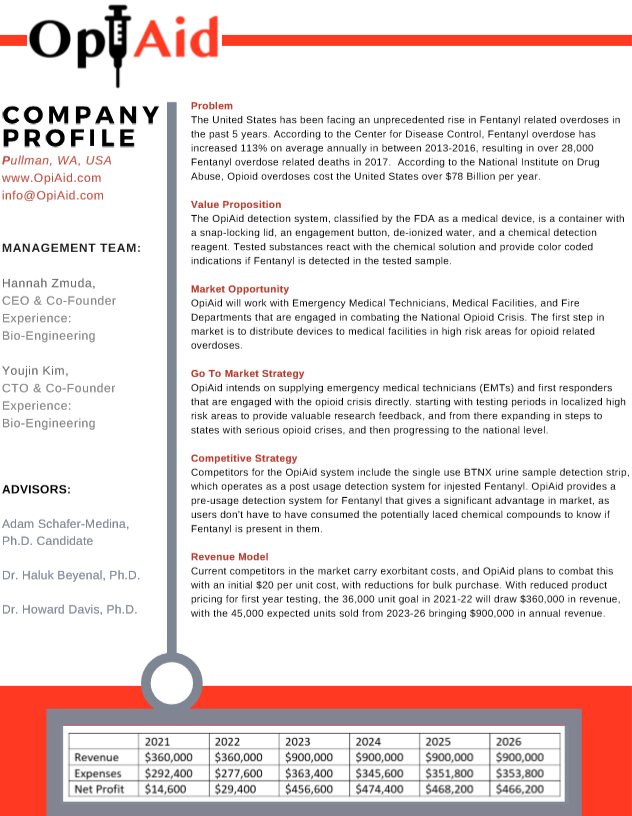
Following the Executive Summary for the Competition, Adam and I developed a Press Release for the product: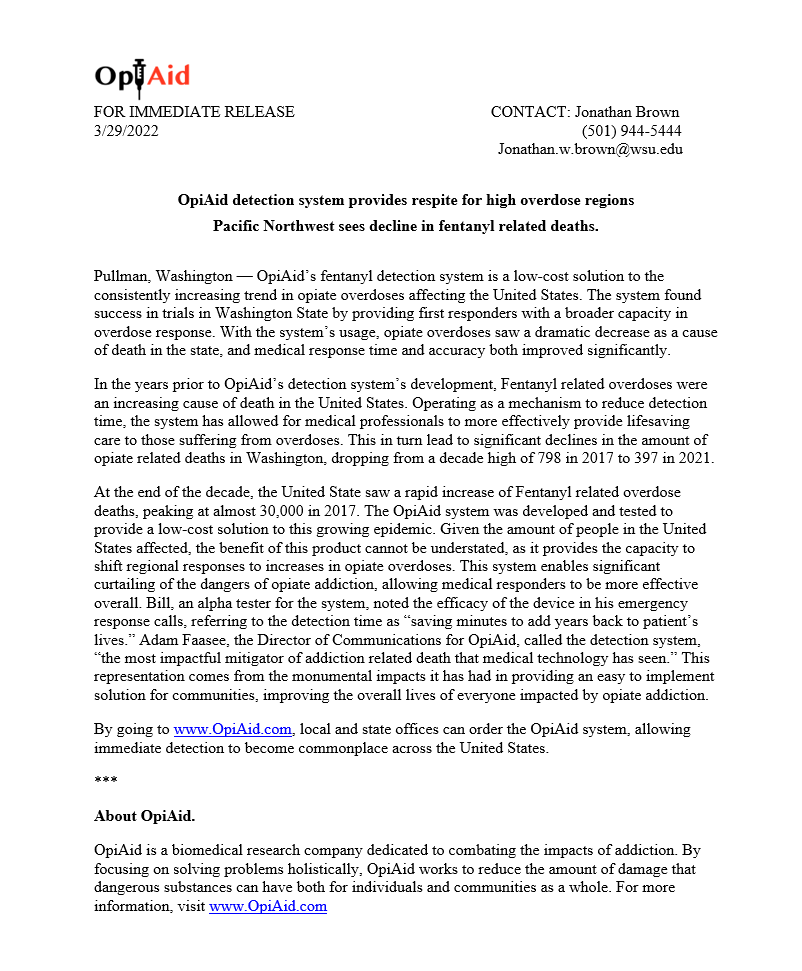
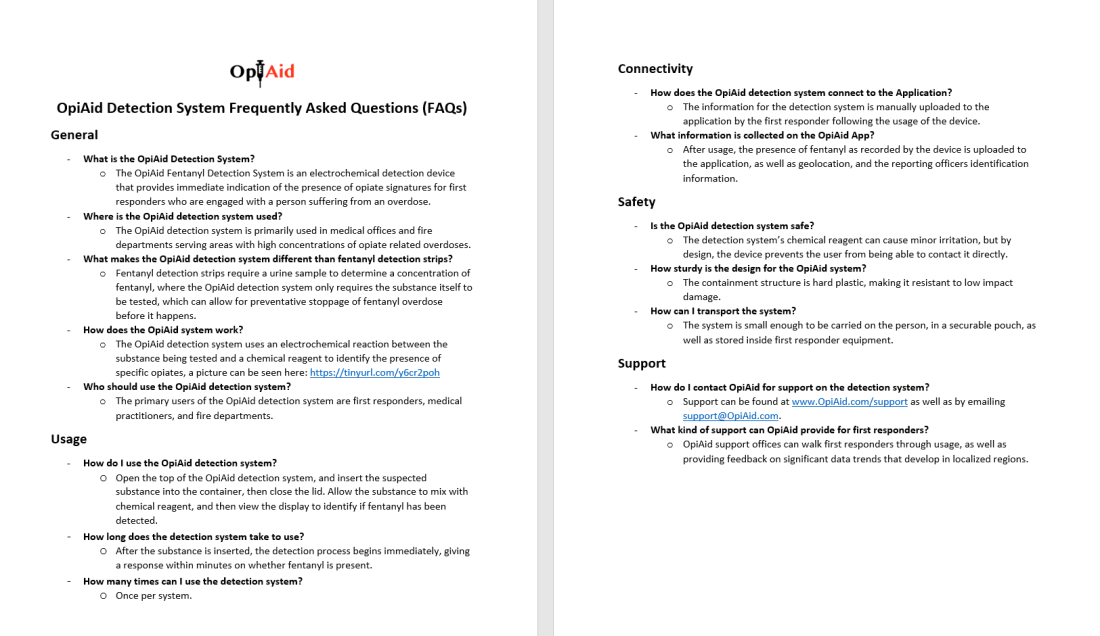
And the Frequently Asked Questions (FAQs) as well:
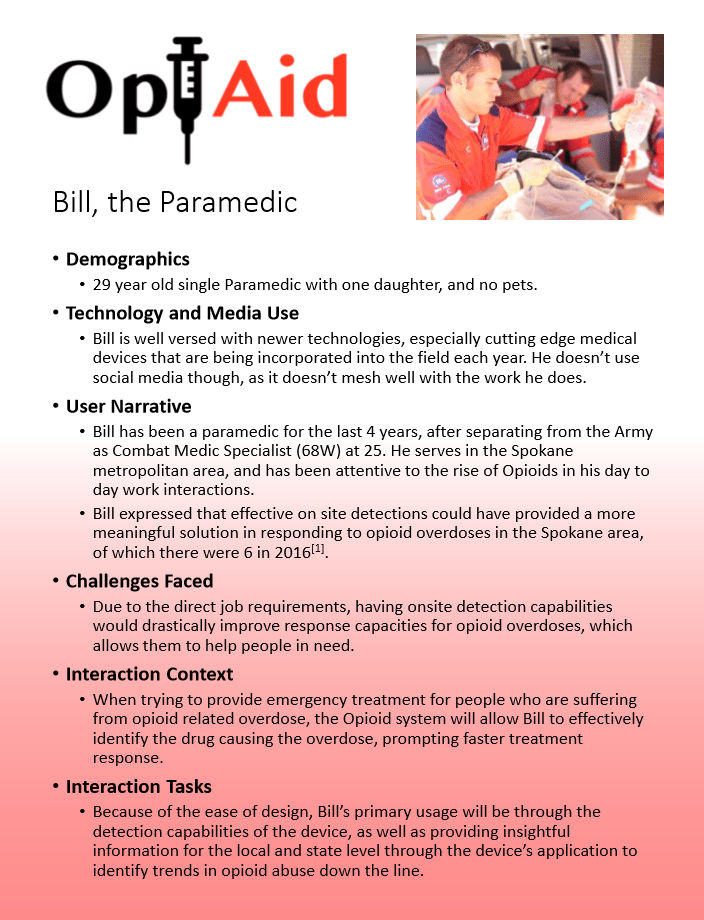
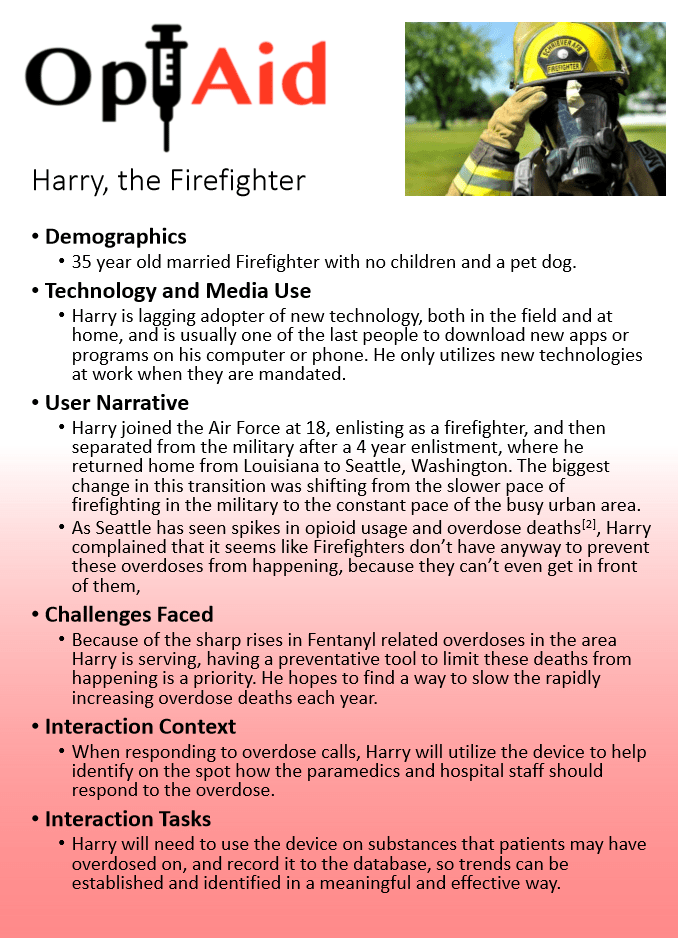
The most complex and thought provoking part of the entire process in learning User Design though, came with the development of the companion Application wire frame, which included both user personas and the framework itself.
The User Personas helped us outline which areas of the application specifically needed work, and how to address them in the different iterative steps of the creation process:
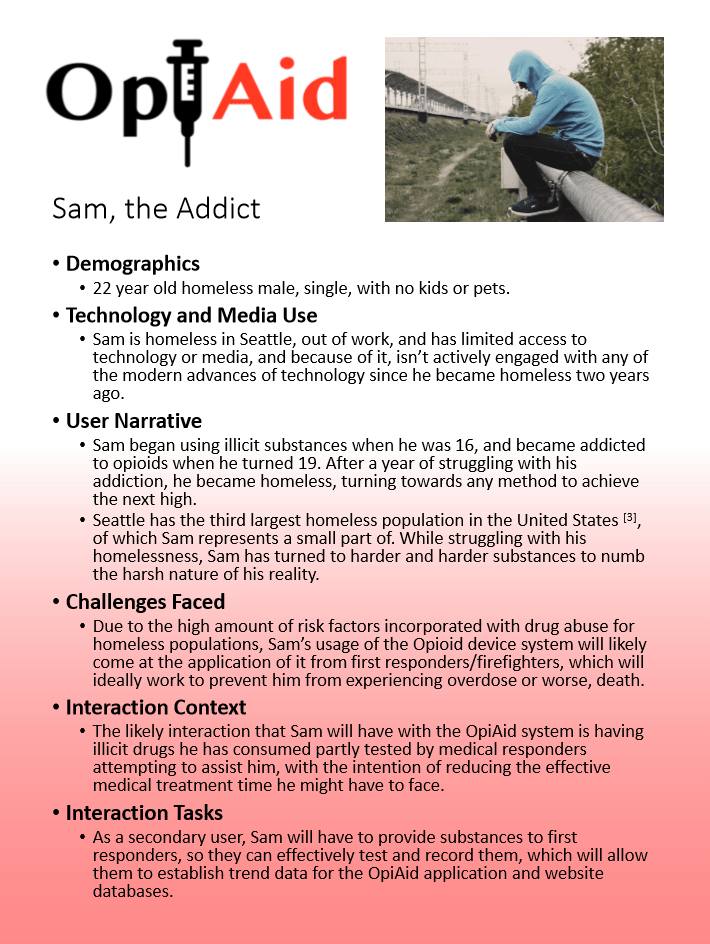
With all of this information presented, it allows for a more holistic understanding of how the creative process was undertaken in developing and designing the application, shifting the focus towards increasing the capacity of first responders to effectively support and help communities affected by opiate abuse.
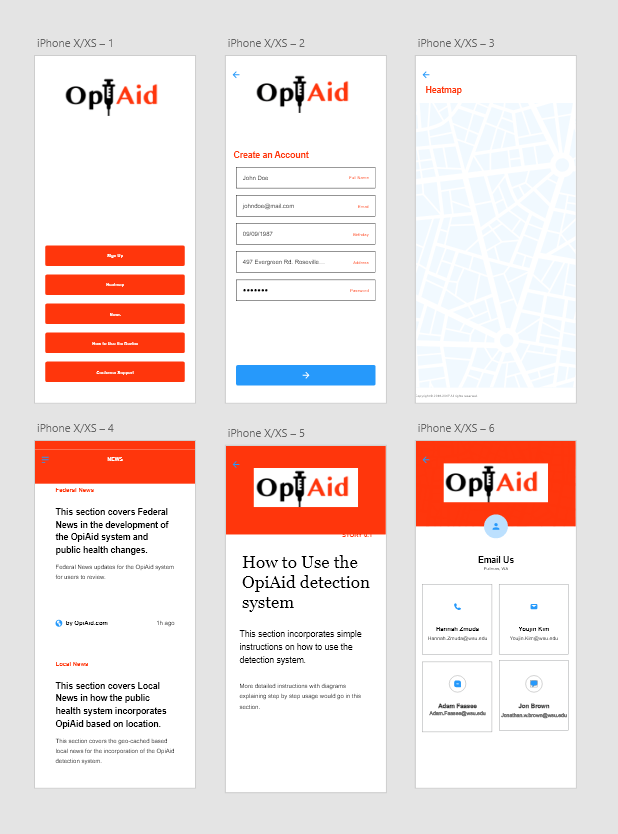
Iteration 1 was a very rudimentary approach to design, and was mostly purposed around trying to include all of the discussed components between Adam, Chris and I about what would be really necessary for a companion application for a detection device.
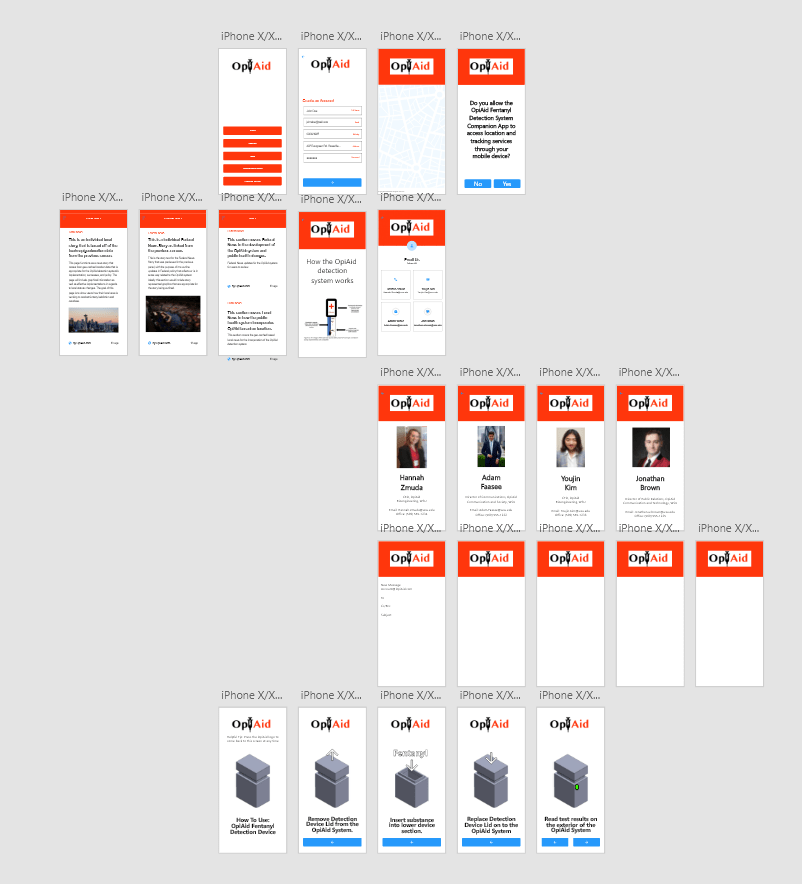
Iteration 2 took the simple framework of Iteration 1 and expanded on it greatly, adding in different functionalities, including changing the entire purpose of the device’s companion application to operate instead as instructions for use first, and having all the secondary components come afterwards.
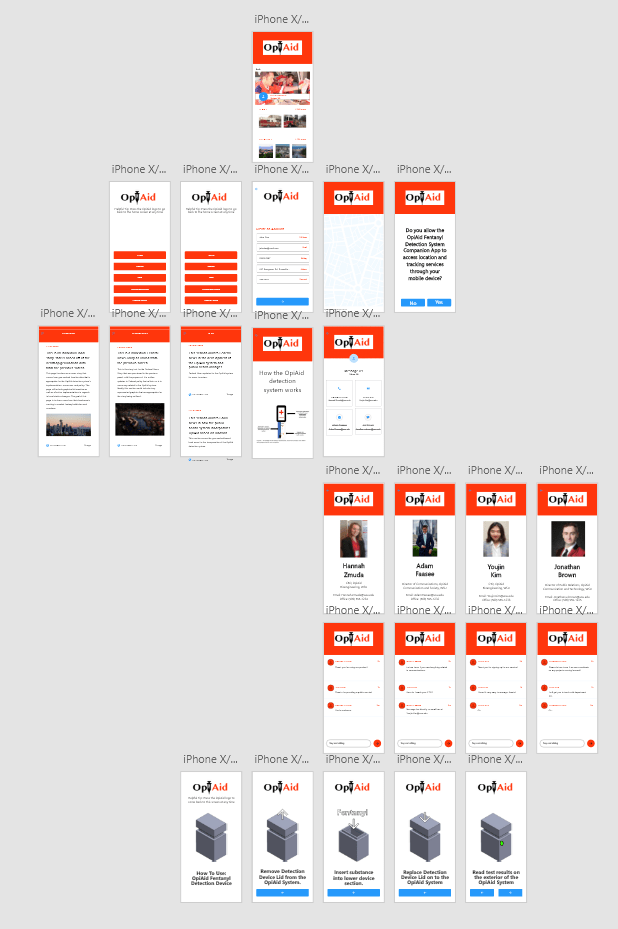
The final iteration of this design took the changes from Iteration 2 and polished them significantly, focusing on building a consistent and clear brand for the product, as well as making sure that the functionality of the device was coherent and robust.
This project was an incredibly fascinating growing experience for me, where I learned a lot about how to build a functional, logical system of operations for a consumer to use, especially keeping the user’s perceptions of how to use it in mind. I think the biggest things I learned in this process was how to incorporate visually stimulating design into a functional framework, and how to establish a consistent brand image and message for the entire company.
Moving forward, I aspire to be able to apply the lessons and information that I gained from this class into much larger scale professional projects, and hopefully to be able to use them as presentable skills for both employers and peers to utilize in professional and personal frameworks.
Thank you for reading through this process with me, if you have any questions about any steps in this process, feel free to email me at Jonathan.w.brown@wsu.edu. or Jonwbrown243@gmail.com
 COM 490 - OpiAid Project